

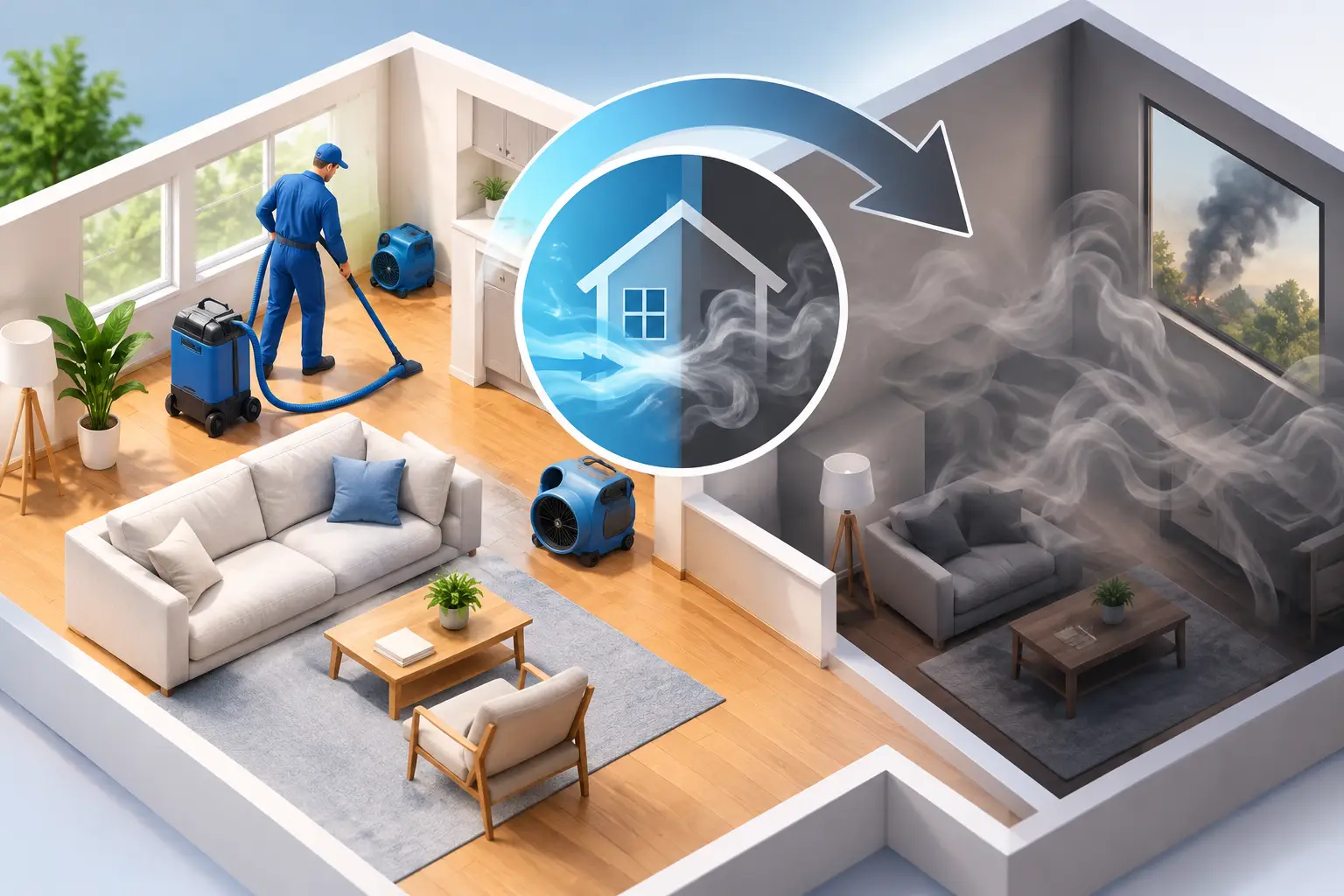
Can Smoke Odors Return After Restoration?
A home can look clean, freshly painted, and fully repaired after a fire, yet a sharp smoky smell returns the first time the heat runs, humidity rises, or a cabinet door opens. So, can smoke odors return after restoration? Yes. When the underlying residue was not fully removed or properly sealed, odor can reappear weeks or even months later.
For Los Angeles-area property owners, this is more than a comfort issue. Persistent smoke odor can affect indoor air quality, damage the perception of a finished renovation, complicate insurance discussions, and undermine the value of a high-end home. A lasting solution requires a structured restoration process that identifies where smoke traveled, what materials absorbed it, and which building components need cleaning, sealing, or replacement.
Why Smoke Odors Return After Cleanup
Smoke is not a single surface-level contaminant. Fire produces a complex combination of soot, ash, oils, gases, and microscopic particles. Those particles move through the structure quickly, often settling in locations that are not visible during a basic cleaning: inside wall cavities, behind baseboards, under flooring, above ceilings, within insulation, and throughout HVAC equipment.
The odor may seem gone immediately after deodorizing because fragrances, ozone treatments, or temporary ventilation can mask it. But masking is not removal. When temperature or moisture changes, trapped residues can release volatile compounds back into the air. This is why homeowners often notice smoke odor on warm afternoons, during Santa Ana wind conditions, or after turning on the furnace or air conditioner for the first time.
The severity of recurrence depends on the fire type, how long smoke remained in the property, the materials affected, and the quality of the initial remediation. A small kitchen fire with fast response may be contained. A structure fire, attic fire, or fire involving plastics, fabrics, insulation, or synthetic finishes requires a far more comprehensive scope.
Where Smoke Odor Commonly Hides
Visible soot is only part of the damage. In a well-managed smoke damage repair project, the assessment must account for the entire building envelope and mechanical system, not just the rooms that look affected.
Porous materials are especially difficult. Drywall, wood framing, carpeting, upholstered furniture, drapery, insulation, acoustic materials, and unfinished concrete can absorb smoke particles. In some cases, professional cleaning and sealing are appropriate. In others, replacement is the more reliable and cost-effective long-term decision.
HVAC systems deserve particular attention. If smoke entered return vents or traveled through ductwork, every heating or cooling cycle can redistribute odor and fine particles. Replacing filters alone rarely resolves this issue. Depending on the conditions, the system may need detailed cleaning, component inspection, duct treatment, and confirmation that residue has not settled in inaccessible areas.
Cabinets, closets, and built-ins can also hold odor long after the rest of the room appears restored. Smoke may collect behind cabinet boxes, beneath toe kicks, inside drawers, and in wall penetrations around plumbing or electrical work. Flooring presents similar challenges. Smoke can migrate beneath carpet padding, into subflooring, through expansion gaps in wood floors, and under baseboards.
Can Smoke Odors Return After Painting?
Yes. Fresh paint can improve appearance, but standard paint is not a dependable smoke-odor solution on its own. If soot and oily residues remain on a surface, paint may adhere poorly and odor can eventually migrate through the finish. This is one reason a rushed cosmetic repair often fails.
Before painting, surfaces need the correct cleaning method for the type of residue present. Once properly cleaned and dried, affected materials may require a professional-grade odor-blocking primer or sealer designed for fire and smoke restoration. The sequence matters: clean, remove damaged material where necessary, dry the assembly, seal as appropriate, then rebuild and finish.
Sealing should also be selective, not automatic. Encapsulating a material that is wet, heavily contaminated, or structurally compromised can lock in a larger problem. A qualified contractor evaluates whether the material is a candidate for restoration or whether it should be removed to protect the finished project.
The Difference Between Deodorizing and Restoring
Deodorizing is one part of recovery. Restoration is a controlled process that returns the property to a clean, functional, and finished condition. The difference is especially clear in larger homes and substantial remodels, where multiple finishes, concealed systems, and custom details create more places for contamination to travel.
A complete scope typically begins with documentation and a room-by-room inspection. The team identifies soot patterns, moisture conditions from firefighting efforts, affected assemblies, mechanical pathways, and contents that may need specialty cleaning or off-site treatment. From there, work can be organized into containment, removal, cleaning, odor control, repair, and final finish work.
Professional-grade equipment can support this process, including HEPA filtration, negative-air containment, specialized vacuums, hydroxyl treatment, thermal fogging, and moisture-monitoring tools. However, equipment is not a substitute for correct diagnosis. Thermal fogging or ozone treatment may reduce odor, but neither method can compensate for contaminated insulation, uncleaned ductwork, or smoke residue left behind a new wall finish.
Warning Signs the Odor Problem Is Not Resolved
A recurring smell is the obvious sign, but it is not the only one. Homeowners should pay close attention if odor is stronger near vents, closets, attics, cabinets, or exterior walls. Yellowing or brown staining around ceilings, trim, and air registers can also indicate residue migration.
Other warning signs include a smoky smell that returns after rain or high humidity, a noticeable odor when the HVAC system starts, or a scent that becomes stronger in closed rooms. If new paint, flooring, or cabinetry was installed soon after a fire without a documented cleaning and sealing process, it is reasonable to request a closer assessment.
Do not rely on fragrance products or repeated air freshening as proof that the issue is solved. These products can make it harder to determine the true extent of contamination while adding another scent layer to the interior environment.
A Better Approach to Lasting Smoke Damage Repair
The most reliable outcome comes from treating smoke damage as both a restoration and construction project. The work must protect the home during remediation, remove contamination at the source, and rebuild affected areas to the same standard expected of the original residence.
For a premium property, that means coordinating the technical work with the finish work from the beginning. If drywall is opened, the repair plan should account for insulation, electrical corrections, HVAC access, cabinetry interfaces, flooring transitions, texture matching, paint systems, and final detailing. Fragmented vendor coordination can leave gaps between remediation and reconstruction, which is often where recurring odors and inconsistent finishes begin.
MDM General Contractor approaches complex recovery work with end-to-end management, bringing assessment, design coordination, material decisions, reconstruction, and quality control into one accountable process. That structure matters when a fire repair also becomes an opportunity to improve an outdated kitchen, reconfigure damaged space, upgrade finishes, or bring concealed systems up to current standards.
When Replacement Is the Smarter Decision
Not every smoke-affected material should be saved. Sentimental value, budget, insurance coverage, and project timing all influence the decision, but the long-term performance of the home should remain the standard.
Replacement is commonly the better path when insulation has absorbed substantial smoke, carpeting and padding remain odorous after cleaning, drywall has heavy contamination or water damage, or wood components cannot be effectively cleaned in place. It may also be preferable when the cost of repeated deodorizing approaches the cost of targeted demolition and professional reconstruction.
The goal is not to remove more than necessary. It is to avoid rebuilding over conditions that will compromise the finished home later. A precise scope protects both the budget and the quality of the result.
If smoke odor returns, treat it as useful evidence rather than a minor annoyance. It is the home indicating that residue remains somewhere in the system, and a careful investigation now can prevent a much larger correction after the renovation is complete.