
Smoke Remediation After House Fire Explained
A fire can be contained to one room and still leave the entire home compromised. Smoke moves through return vents, wall cavities, attic spaces, cabinetry, and soft finishes long after the flames are out. What looks like a manageable cleanup can become a costly secondary-loss issue when soot, odor, moisture, and damaged building materials are not addressed in the right order.
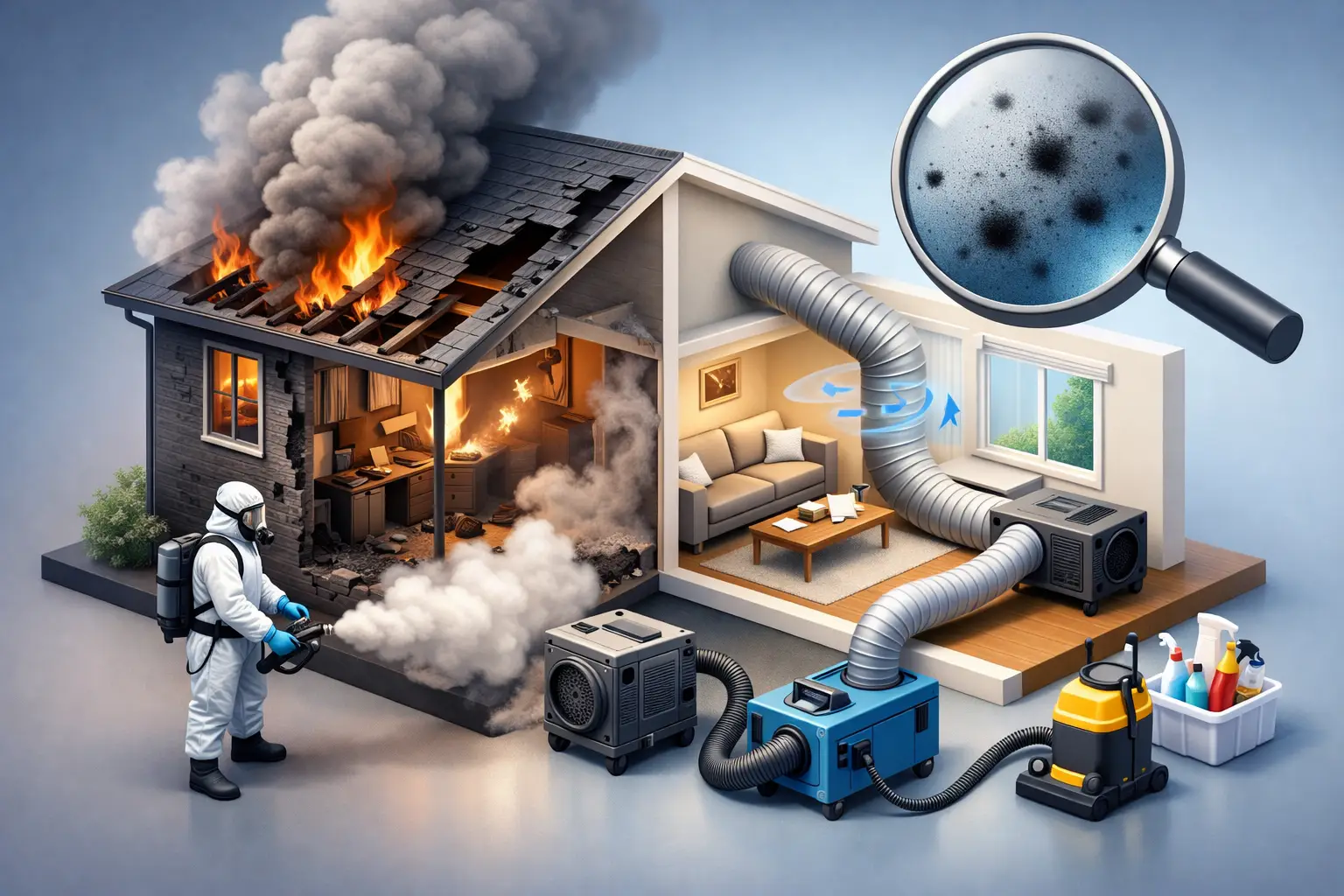
Smoke remediation after house fire is not simply a cleaning service. It is a controlled recovery process that protects the structure, preserves salvageable materials, documents damage for insurance, and establishes a reliable path toward repair or a full fire rebuild. For Los Angeles-area homeowners, that process also needs to account for local permitting, older construction methods, premium finishes, and the practical reality of living through a major property loss.
Why Smoke Damage Requires a Professional Response
Smoke residue is made up of fine particles, oils, chemicals, and acids created by the materials that burned. Its behavior depends on the fire source, temperature, ventilation, and how long the smoke remained inside the property. A hot, fast-burning fire can leave a fine, dry residue. A slow, smoldering fire often produces thick, greasy soot that bonds aggressively to painted walls, millwork, stone, appliances, and textiles.
The damage is not always obvious. Black residue around a doorway is easy to identify, but smoke may also settle behind baseboards, inside recessed lighting, within HVAC components, and above ceiling insulation. If those areas are missed, odor can reappear after finishes are replaced, particularly during warm weather or when the HVAC system is running.
Soot is also corrosive. It can tarnish metal, etch glass, discolor finishes, and degrade electronics if it is left in place. The longer residue remains on a surface, the more difficult and expensive it can be to remove without replacing the material. Quick action matters, but speed should never mean sending unqualified cleaners into a damaged home with household products and good intentions.
The First 48 Hours After a Fire
Once the fire department has released the property, the first priority is safety and stabilization. Do not re-enter until it is approved, and do not turn on electrical, gas, or HVAC systems until qualified professionals have inspected them. A home can look structurally intact while hiding electrical hazards, weakened framing, contaminated air pathways, or water damage from firefighting efforts.
Document the property before items are moved or discarded. Photograph every affected room, visible soot patterns, damaged personal property, exterior openings, and areas with standing water. This record supports the insurance claim and gives the remediation and construction teams a clear baseline. If emergency board-up, roof tarping, or water extraction is needed, those measures should be completed promptly to prevent theft, weather intrusion, mold growth, and additional deterioration.
Avoid wiping walls, vacuuming with a standard household vacuum, washing upholstered furniture, or using odor sprays. Improper cleaning can spread soot deeper into porous materials, permanently smear residue across painted surfaces, and make accurate insurance documentation more difficult. The goal at this stage is to prevent further loss, not make the home look temporarily cleaner.
Smoke Remediation After House Fire: The Right Sequence
A disciplined remediation plan begins with assessment, not demolition. The project team should identify the type and extent of smoke damage, determine whether water and mold risks are present, inspect structural elements, and evaluate the condition of mechanical systems. In a high-value home, this assessment should extend to custom cabinetry, natural stone, hardwood flooring, specialty plaster, built-ins, and integrated technology systems.
1. Secure, inspect, and document the site
The property is secured first, then inspected room by room. Professional teams evaluate the roof, framing, electrical panel, plumbing, HVAC equipment, insulation, drywall, windows, and exterior envelope. They also document the condition of contents and finishes to distinguish what can be restored from what requires replacement.
This is where a contractor with fire rebuild experience adds meaningful value. Remediation decisions affect the future construction scope. Removing too little can trap odor and contamination. Removing too much can increase cost, delay approvals, and eliminate materials that could have been restored.
2. Remove damaged and unsalvageable materials
Porous materials often hold smoke odor and residue more persistently than hard surfaces. Depending on the severity of the event, affected insulation, carpet, padding, drywall, acoustic ceiling materials, upholstery, or drapery may need to be removed. Charred framing and compromised structural components require a separate evaluation, particularly if the fire burned long enough to affect load-bearing members.
Selective demolition should be precise. The objective is to expose and address contaminated assemblies while preserving sound components wherever practical. This approach is especially relevant when a home includes custom architectural details or premium finishes that would be difficult to replicate.
3. Clean soot from structural and finish surfaces
Professional-grade HEPA filtration, specialized vacuums, dry cleaning methods, wet cleaning agents, and controlled abrasion techniques may be used based on the material and residue type. There is no single cleaning method that works everywhere. Dry soot on sealed tile calls for a different approach than oily residue on lacquered cabinetry or smoke staining on unfinished framing.
A qualified team tests cleaning methods in inconspicuous areas and works from the right sequence of surfaces to avoid cross-contamination. Electronics, artwork, and valuable furnishings may require specialty restoration vendors rather than general cleaning. The trade-off is clear: careful restoration can preserve valuable items, but attempting to save heavily contaminated materials can create ongoing odor and reliability issues.
4. Treat the air system and control odor at the source
Smoke odor is not solved by fragrance, fresh paint, or a single air-treatment machine. Those measures may improve the immediate experience, but they do not remove residue embedded in materials or circulating through mechanical systems.
HVAC inspection and cleaning are often essential. Ductwork, air handlers, registers, filters, and insulation surrounding the system can carry smoke particles throughout the property. Depending on conditions, odor-control methods may include hydroxyl treatment, thermal fogging, ozone treatment in unoccupied spaces, sealing of cleaned structural surfaces, or replacement of contaminated components. Each method has a proper application. For example, ozone can be effective in controlled conditions but requires strict safety protocols and should never be treated as a substitute for source removal.
5. Verify conditions before rebuilding
Before drywall closes, cabinets are installed, or new flooring goes down, the team should confirm that contaminated materials have been removed or properly treated. This checkpoint protects the investment in the rebuild. It is far less expensive to correct a lingering odor or missed soot condition while framing is exposed than after a finished kitchen, custom closet, or newly painted interior is complete.
Coordinating Insurance, Design, and Reconstruction
Fire recovery often becomes fragmented when homeowners are forced to coordinate emergency vendors, adjusters, designers, engineers, and multiple construction trades on their own. That lack of coordination can create gaps between the remediation scope and the rebuild scope, leading to change orders, delays, or finish decisions that are made too late.
An end-to-end management approach provides stronger control. The remediation findings should inform architectural planning, engineering needs, permit requirements, material selections, and construction scheduling from the beginning. If the fire exposes outdated electrical, inadequate insulation, unpermitted work, or code deficiencies, the rebuild may be an opportunity to correct those conditions rather than simply restore the home to its prior state.
Insurance coverage and policy language will influence the available scope, so homeowners should review estimates carefully and keep communication documented. It may make sense to separate covered restoration work from elective upgrades, such as a redesigned kitchen, expanded primary suite, upgraded windows, or improved energy performance. A clear division helps protect the claim while allowing the owner to make strategic improvements that support long-term property value.
When Remediation Becomes a Rebuild Decision
Not every fire-damaged home needs a full rebuild. If smoke damage is limited, structural elements are sound, and odor can be eliminated through proper cleaning and material removal, targeted restoration may be the most efficient path. But when fire, water, and smoke affect multiple building systems, piecemeal repair can create a patchwork result and extend the disruption.
A broader reconstruction plan may be justified when structural repairs, electrical replacement, plumbing upgrades, roof work, and major interior finish replacement are already required. This is particularly true for older Southern California homes where opening walls reveals systems that no longer meet current expectations. The decision should be based on verified conditions, insurance parameters, family needs, and the value of completing the work once with consistent design and craftsmanship.
MDM General Contractor manages fire recovery with the same level of planning, material control, and construction oversight applied to major residential projects. The focus is not merely on making a house presentable again. It is on restoring a safe, well-built home with decisions that hold up after the final walkthrough.
The most useful next step after a fire is to establish one documented plan before permanent repairs begin. With the right assessment, disciplined remediation, and accountable construction management, a damaged home can move forward with greater clarity, stronger performance, and a finish level worthy of the property.