

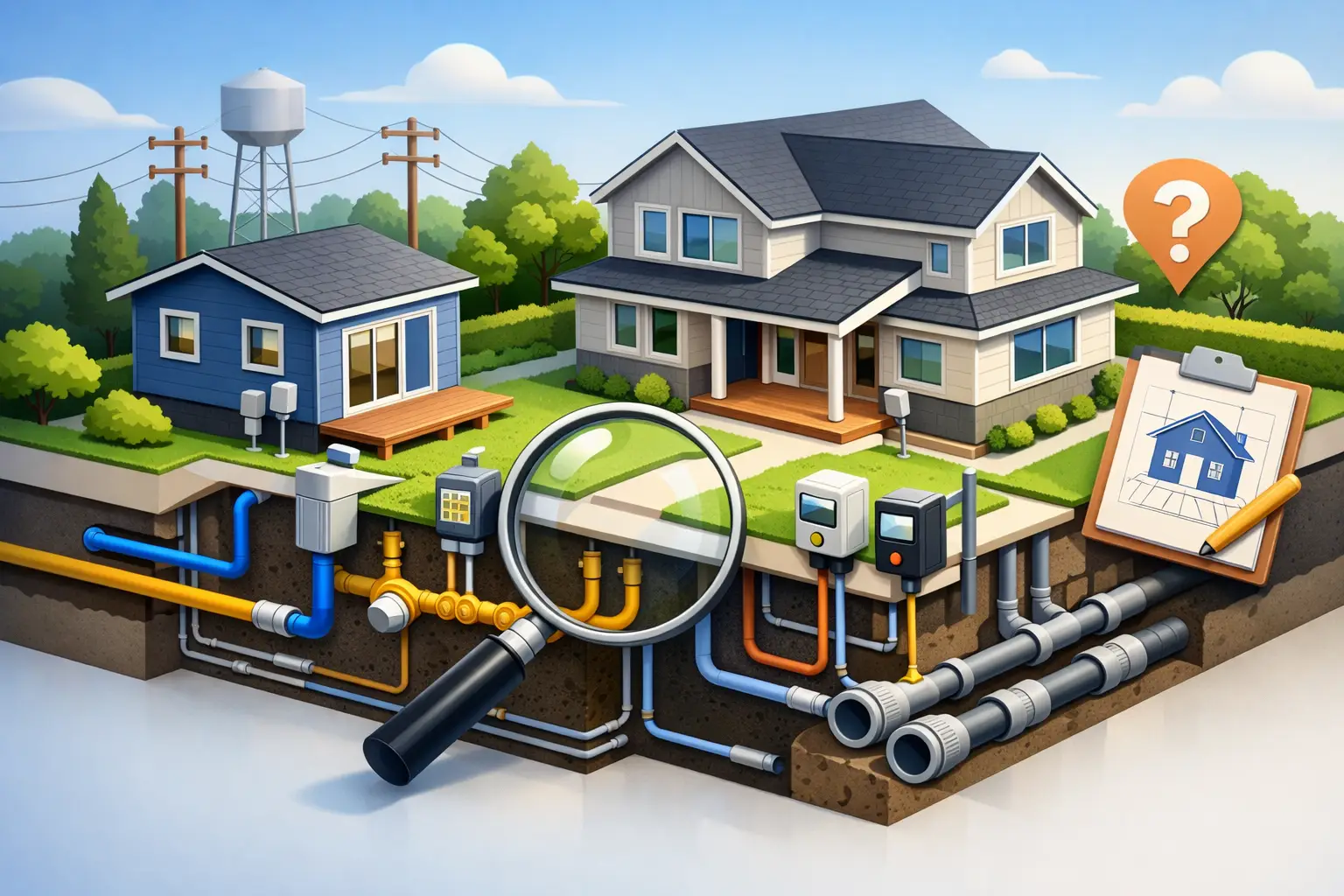
Can ADUs Have Separate Utilities? What to Plan
A detached ADU can feel like a fully independent home, but the infrastructure behind that independence must be planned well before concrete is poured. Can ADUs have separate utilities? In many Southern California projects, yes. The more useful question is which utilities should be separate, which can remain shared, and whether the added cost supports the way you intend to use the property.
For homeowners building a rental unit, multigenerational suite, or long-term investment asset, utility planning affects monthly operating costs, tenant relationships, construction scope, and future flexibility. It is not a detail to leave until the end of design.
Can ADUs Have Separate Utilities in California?
An ADU may be served by separate electric, gas, water, and telecommunications connections, subject to local requirements and the serving utility’s standards. However, separate service is not always mandatory, automatically approved, or financially sensible.
In Los Angeles and surrounding counties, an ADU is commonly connected to the primary residence’s existing utility systems. That arrangement can be simpler and less expensive when the main home has sufficient electrical capacity, properly sized water service, and accessible sewer connections. A separate meter or service can be pursued when the owner wants clearer expense allocation, greater privacy, or a property configuration that calls for more independent operation.
The governing city, county, water agency, power provider, gas provider, and sanitation authority can each influence the final approach. A permit approval for the ADU itself does not eliminate utility-provider review. That is why utility strategy belongs in preconstruction, alongside site planning, architecture, engineering, and budget development.
Separate Meters vs. Separate Utility Services
These terms are often treated as interchangeable, but they describe different levels of work.
A separate meter measures the ADU’s consumption independently. For electricity, that may involve a dedicated meter and panel. For water, it may mean a second meter or a recognized submetering arrangement, depending on the local provider. Separate metering can make billing more transparent, particularly when the ADU will be rented.
A separate service is a more substantial arrangement. It may include a new electrical service connection, new service conductors, dedicated water lateral, separate gas line, or other infrastructure that connects independently to the public system. This can require more utility coordination, excavation, engineering, fees, and lead time.
An ADU can also have dedicated branch circuits, its own subpanel, and individual shutoff valves while still being supplied through the primary residence’s utility meter. That configuration does not create separate bills, but it gives the owner useful operational control and makes maintenance easier.
How Each Utility Is Typically Handled
Electricity
Electrical capacity is often the first major issue. An ADU adds lighting, appliances, HVAC equipment, water heating, and potentially electric vehicle charging. In an all-electric ADU, the load can be significant even with high-efficiency equipment.
If the existing main service has capacity, the ADU may be fed from the primary home’s electrical system through a new subpanel. If it does not, the project may require a main panel upgrade, service upgrade, or a separately metered electrical service. The right decision depends on the electrical load calculation, the existing panel condition, local utility standards, and the owner’s future plans for solar, battery storage, and EV charging.
Separate electric metering is often appealing for a rental ADU, but it should not be treated as a simple add-on. The route from the utility point of connection to the ADU, trenching conditions, panel locations, and utility equipment clearances can materially change the cost.
Water and Sewer
Water can be shared from the primary residence’s service or separately metered where the local water agency allows it. A dedicated water meter gives owners clean usage data and avoids disputes over irrigation, laundry, or unusually high consumption. It also may bring connection fees and additional site work.
Sewer is different. Most ADUs connect to the existing sewer lateral serving the property, provided capacity and local requirements are met. A separate sewer bill may not be available simply because the unit has a separate water or electric meter. Where a public sewer connection is impractical, a qualified design team must assess alternatives carefully, particularly on hillside, rural, or constrained sites.
Before finalizing the layout, the team should locate the existing water line, sewer lateral, cleanouts, and any easements. A beautiful detached ADU placement can become expensive if the utility path crosses hardscape, mature landscaping, retaining walls, or a difficult access area.
Natural Gas
If the ADU uses gas for cooking, space heating, clothes drying, or water heating, it can often be served by an extension from the existing gas meter. A separate gas meter may be possible, but it depends on the gas provider and the proposed demand.
Many new ADU projects now lean toward all-electric systems. Heat-pump HVAC, heat-pump water heaters, induction cooking, and high-performance insulation can reduce the need for a separate gas service. That choice may simplify the utility plan, although it puts greater emphasis on electrical service capacity.
Internet, Cable, and Security
Low-voltage infrastructure is easier to overlook because it is rarely central to permit review. It still matters to the daily experience of the unit. A rental ADU may need its own internet account, while a family suite might be best served by a hardwired extension of the main home’s network.
Plan conduit during site work, even if a separate provider connection is not installed immediately. Adding protected pathways before landscaping and finishes are complete is inexpensive compared with reopening a finished yard later.
Why Owners Choose Separate Utilities
The strongest reason is billing clarity. When an ADU is rented, separate electric or water metering can prevent uncomfortable calculations and give residents control over their own use. It can also improve the unit’s appeal for longer-term tenants who expect a more independent living arrangement.
Separate utilities can also support privacy and property management. A dedicated shutoff, panel, or meter lets an owner perform maintenance without interrupting the main residence. For investors, clearly documented utility configurations can make income and operating expenses easier to evaluate.
Still, complete separation is not always the best financial decision. If a homeowner intends to use the ADU for parents, adult children, guests, or a home office, shared service with intelligent submetering may offer the better return. The owner gains visibility without paying for every separate connection and service fee.
The Cost Drivers That Change the Answer
The meter itself is rarely the entire cost. The larger variables are service capacity, distance, access, excavation, utility upgrades, and restoration work.
A flat lot with an accessible utility route may support a straightforward installation. A property with a long driveway, protected trees, premium hardscape, a steep grade, or limited access can require extensive trenching and repair. Older homes may also need a larger electrical service before an ADU can be added safely and compliantly.
There are recurring costs as well. Separate accounts can mean additional monthly customer charges, even when the ADU is vacant. Owners should compare those ongoing expenses with the administrative benefit of independent billing.
Build Utility Planning Into the Design Phase
The most effective ADU projects settle utility questions before construction documents are finalized. That prevents the common scenario in which an owner requests separate meters after the panel location, plumbing route, and finished site plan are already locked in.
A professional preconstruction review should establish the intended use of the ADU, identify existing service sizes and locations, complete electrical load calculations, evaluate water and sewer routing, and verify agency requirements. It should also account for the site plan as a whole. Pool equipment, landscape irrigation, solar equipment, backup power, and future EV charging all compete for space and capacity.
At MDM General Contractor, this coordination is part of an end-to-end design-build process. The objective is not simply to get utilities to the ADU. It is to create an infrastructure plan that supports the home’s finish level, daily use, permitting path, and long-term value without avoidable change orders.
Questions Homeowners Should Resolve Early
Will the ADU be rented or used by family?
A market-rate rental often benefits from independent electrical billing and clear water-use expectations. A family unit may prioritize convenient shared systems, dedicated shutoffs, and reliable connectivity instead.
Is the main house ready for more electrical load?
Do not assume that a large-looking panel has enough capacity. A formal load calculation determines whether the existing service can accommodate the ADU and planned upgrades elsewhere on the property.
What will future buyers or investors expect?
A separately metered ADU can be attractive in some markets, especially where the unit is positioned as an income-producing residence. In other cases, excellent design, legal permitting, and a well-executed site plan carry more value than full utility independence.
The best utility plan is the one that matches the ADU’s purpose and the property’s constraints from the beginning. Decide how independent the unit needs to be, then invest in the infrastructure that makes that decision practical for years to come.