

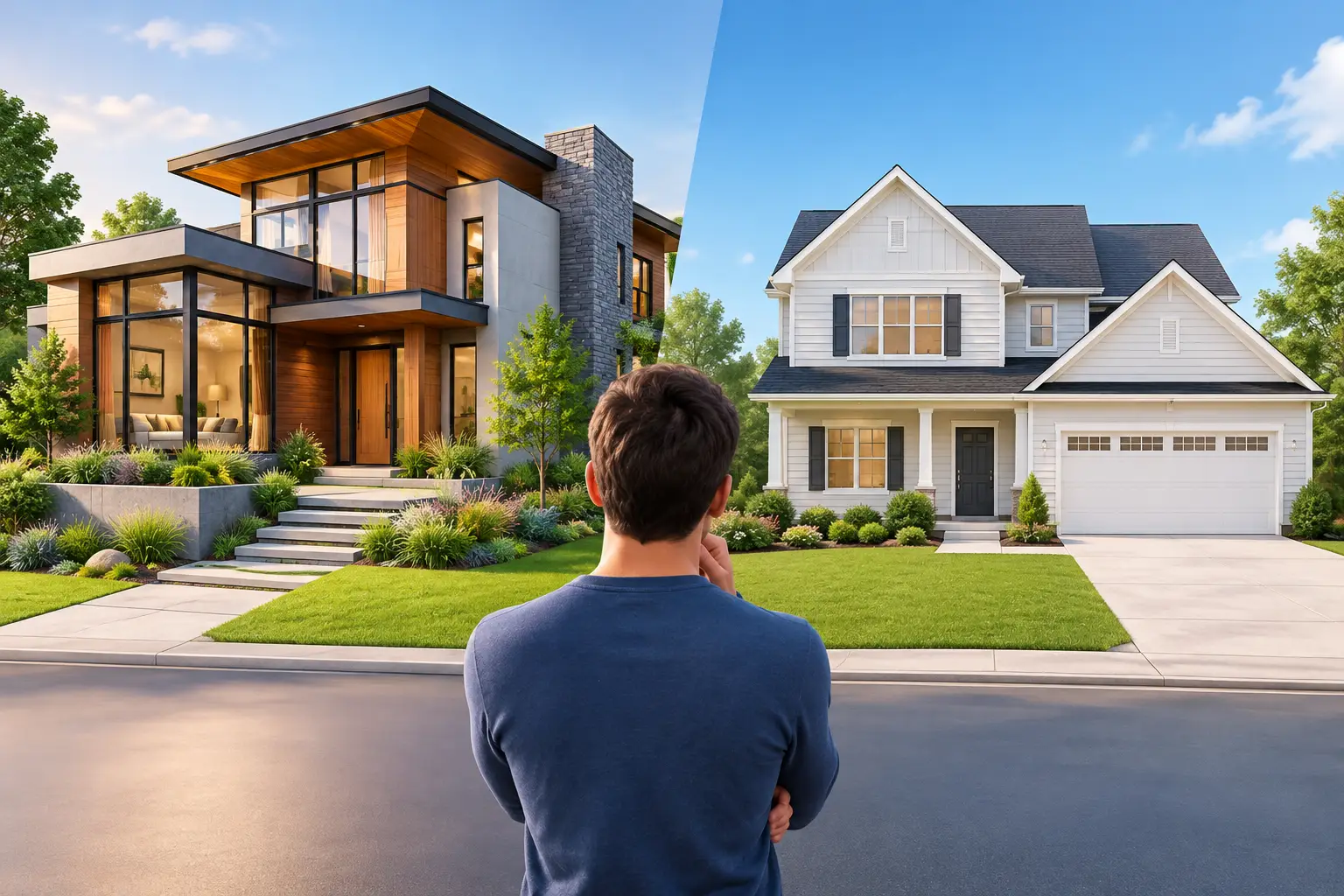
Custom Home vs Spec Home: Which Fits You?
A hillside lot in Los Angeles, a growing family in Orange County, or an investor evaluating a new-build opportunity all raise the same question: custom home vs spec home – which path delivers the right result? The answer is not simply about budget. It is about control, timing, risk tolerance, location, and the level of finish you expect when the project is complete.
A spec home can offer speed and simplicity. A custom home gives you the ability to shape the property around your life, your site, and your standards. For a major investment in Southern California, the better choice is the one that aligns with how you plan to use, hold, and manage the property.
What Is a Spec Home?
A spec home, short for speculative home, is built by a developer or builder before a specific buyer is under contract. The builder selects the floor plan, exterior architecture, materials, fixtures, and finish level based on what they believe the market will buy. Once completed, the home is sold as a finished product, although buyers may sometimes purchase early enough to choose limited upgrades.
The appeal is clear. You can walk through a real property, see the finishes in place, and make a purchase decision without managing a long design and construction process. In a strong market, a well-executed spec home can also provide access to a new residence in a neighborhood where vacant buildable lots are scarce.
That convenience has boundaries. The layout has already been determined. Structural changes, major system upgrades, and substantial material substitutions may be impractical or unavailable, especially once construction is underway. The home may be attractive, but it was designed for a target buyer profile rather than your exact routines, collection of vehicles, work-from-home needs, or long-term family plans.
What Makes a Custom Home Different?
A custom home begins with the owner. You select or already own the lot, establish the project goals, and work through architecture, engineering, design, permitting, materials, and construction with a professional team. Every decision does not need to be unusual, but every major decision can be intentional.
That can mean placing the primary suite to capture a view while protecting privacy, planning an ADU for family or rental income, creating a kitchen that supports serious entertaining, or engineering the structure for a challenging slope. In fire-prone, seismic, or tightly regulated areas of Southern California, custom planning also allows the project team to address site conditions from the beginning rather than forcing an existing plan onto the parcel.
A custom home requires more participation at the start, but a capable design-build team creates order around that involvement. Preconstruction should define the scope, budget range, schedule, permit strategy, finish selections, and decision deadlines before field work accelerates. This is where professional project management matters most: it turns a collection of preferences into a buildable, coordinated plan.
Custom Home vs Spec Home: The Core Trade-Offs
The central difference is control versus convenience. With a spec home, many choices have already been made, allowing you to move faster with fewer decisions. With a custom home, you have greater authority over design, performance, and finish quality, but you also need the patience to make decisions at the right time.
Cost certainty is not the same as lowest cost
A completed spec home has a visible purchase price. That can feel more certain than a custom project, where land cost, design fees, engineering, permit requirements, site work, and construction pricing must all be considered. However, a visible price does not automatically make a spec home the better financial value.
Spec pricing includes the developer’s land basis, financing costs, overhead, risk, and profit margin. A custom build does not eliminate those costs entirely, but it gives you more visibility into where the budget is going and where a premium is justified. You may decide that higher-performing windows, better insulation, a stronger HVAC design, or a more durable exterior is worth the investment because you plan to own the home for years.
Custom projects also need contingency planning. Unknown conditions can emerge after demolition, excavation, utility investigation, or municipal review. A responsible budget recognizes those variables rather than treating them as surprises. On a complex lot, the least expensive initial proposal is rarely the most reliable project plan.
Timing depends on the stage of the spec home
If a spec home is complete or nearing completion, it can be the faster route. The permits are already in place, inspections are underway or finished, and the buyer can focus on financing, closing, and furnishing. This can be especially valuable for buyers relocating on a firm schedule.
A ground-up custom home typically takes longer because planning comes first. Architecture, structural engineering, energy documentation, soils reports, agency comments, plan checks, and material lead times can all affect the schedule. Los Angeles-area jurisdictions may add layers of review related to zoning, hillside conditions, wildfire requirements, drainage, or protected trees.
The advantage of the longer preconstruction phase is reduced chaos during construction. When the plans are coordinated and selections are made early, the field team can sequence work more efficiently and avoid costly change orders caused by unresolved decisions.
Design freedom affects daily life and resale
A custom home gives you the ability to create spaces that make practical sense for your household. That may include a concealed pantry, a gym with proper flooring and ventilation, aging-in-place features, a dedicated office with acoustic separation, or a garage designed around storage and EV charging. These are not decorative extras when they directly improve how the home performs.
Still, custom does not mean designing only for personal taste. Highly specific features can narrow resale appeal if they compromise basic function or overwhelm the architecture. The strongest custom homes balance individual needs with timeless proportions, durable materials, and a layout that will remain compelling to future buyers.
Spec homes usually make safer, broader market choices. That can help resale, but it can also produce familiar layouts and finishes that look polished without providing the depth or flexibility a discerning owner expects.
When a Spec Home Is the Better Choice
A spec home can be the right decision when time is limited, you prefer to see the finished property before committing, and the existing plan genuinely suits your needs. It is also a strong option when the builder has a verified record of construction quality, provides complete documentation, and allows a thorough independent inspection.
Buyers should look beyond countertops and staging. Ask about the framing, waterproofing approach, roof assembly, HVAC equipment, electrical capacity, insulation, drainage, appliance warranties, and permit history. Premium-looking finishes do not compensate for weak execution behind the walls.
For an investor, a completed spec home may also offer a more immediate path to occupancy or resale. The key is to evaluate the purchase against comparable sales, local demand, carrying costs, and the quality level expected in that submarket.
When a Custom Home Is Worth the Commitment
A custom build is often the stronger choice when the lot is exceptional, the property has difficult physical constraints, or the owner has clear functional and aesthetic goals that standard plans cannot satisfy. It is particularly valuable for clients who intend to live in the home long term and want every major system to support their lifestyle.
It can also be the more strategic approach for owners considering a significant transformation of an existing property. A full rebuild, major addition, or fire rebuild may create the opportunity to correct decades of inefficient planning while bringing the home up to modern structural, energy, and safety standards.
The success of a custom project depends heavily on team alignment. MDM General Contractor approaches this work as an end-to-end process, coordinating design, permitting, materials, construction, and project oversight so owners do not have to manage disconnected consultants and trades on their own.
Questions to Ask Before You Commit
Before buying a spec home, ask whether you would still choose the layout if the staging and finishes were removed. Confirm what is included, what warranties transfer, whether all final inspections are complete, and what changes are possible before closing.
Before starting a custom home, ask whether you have defined the priorities that should guide trade-offs. Your team should understand the target investment level, must-have spaces, desired completion date, site constraints, and how long you expect to own the property. A clear brief is more valuable than a long list of disconnected inspiration images.
Also consider the location honestly. In sought-after parts of Los Angeles, Orange County, Riverside, and San Bernardino counties, land conditions and local approvals can shape the project as much as the architecture does. A disciplined feasibility review early in the process protects both the budget and the design intent.
The right home should not merely look finished on closing day. Whether you choose a spec property or commission a custom build, choose the path that gives you confidence in the construction behind the finishes and a home that will continue to serve you well years after move-in.