

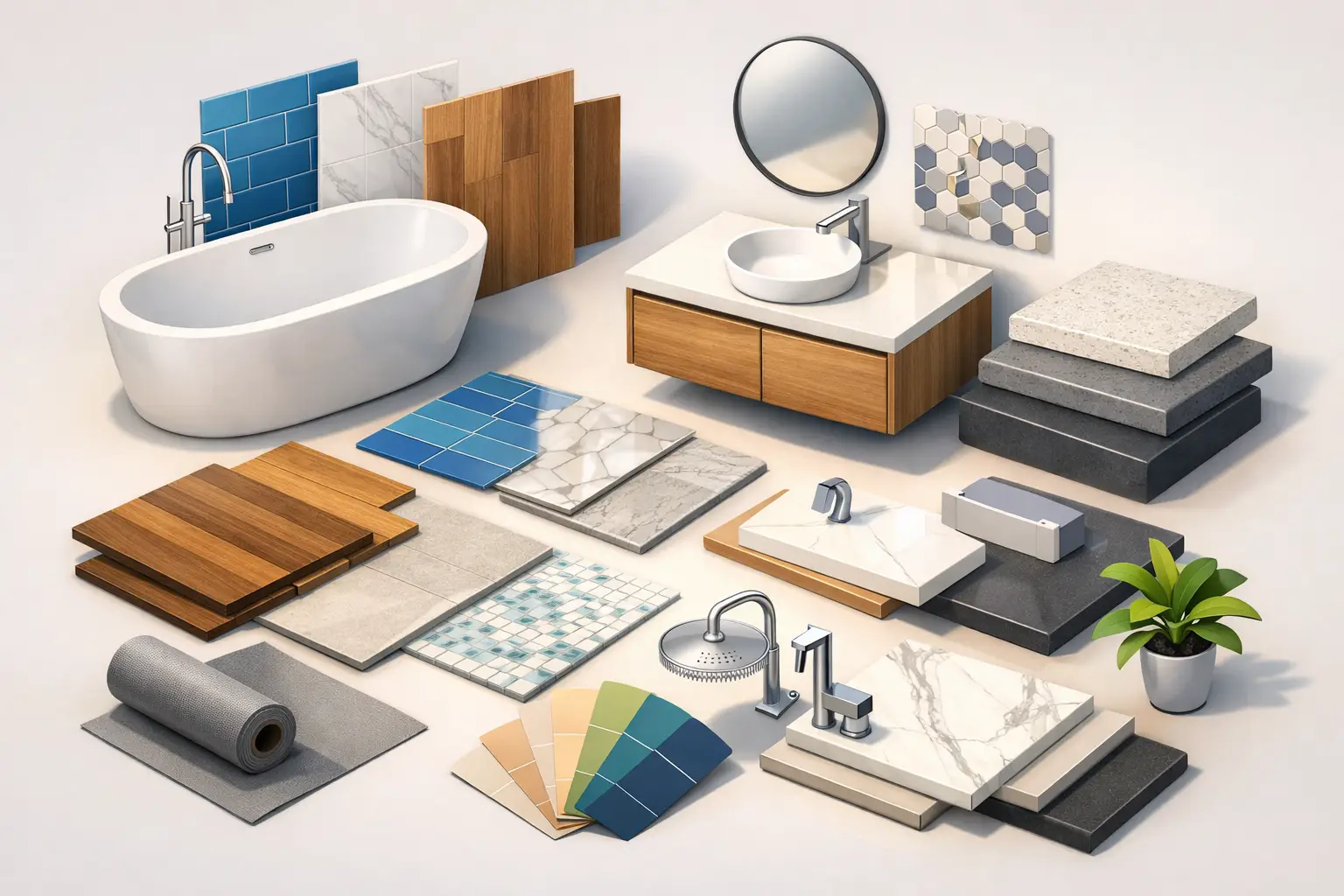
Best Materials for Bathroom Remodel Projects
A luxury bathroom can look exceptional on the day it is finished and still fail prematurely if its material package was selected without regard for moisture, movement, cleaning demands, and daily use. The best materials for bathroom remodel projects are not simply the most expensive options in a showroom. They are the materials that perform together as a complete system – from waterproofing behind the walls to the finish on the vanity hardware.
For Los Angeles homeowners, the right choices also depend on the home itself. A primary suite in a hillside property, a compact guest bath in a Spanish Revival home, and a high-traffic family bathroom each place different demands on flooring, stone, cabinetry, and fixtures. A disciplined design-build process evaluates those conditions before final selections are made.
Start With the Material Behind the Finish
The most consequential bathroom material is often the one no guest will see. A professionally built shower requires a continuous waterproofing assembly, properly sloped drainage, sealed penetrations, and compatible setting materials. Tile and grout are finish surfaces, not waterproofing.
For shower walls and floors, a bonded waterproof membrane or a fully integrated shower system provides dependable protection when installed according to manufacturer requirements. Cement backer board can be part of the assembly, but it is not a substitute for waterproofing. This distinction matters because water intrusion can damage framing, subflooring, adjacent rooms, and finishes long before visible signs appear.
Proper substrate preparation also protects high-end finishes. Large-format porcelain, natural stone slabs, and oversized tiles require flat, stable surfaces. If the framing, wall plane, or subfloor is out of tolerance, even premium materials can develop lippage, cracked grout joints, or loose tile. Material quality and installation quality must be managed together.
Best Materials for Bathroom Remodel Floors
Bathroom flooring needs to balance appearance, slip resistance, water tolerance, and maintenance. In most high-quality remodels, porcelain tile is the strongest all-around choice.
Porcelain Tile
Porcelain is dense, low-absorption, durable, and available in a wide range of stone, concrete, wood, and plaster looks. It works especially well for bathroom floors, shower walls, and wet-room applications. Through-body porcelain and quality glazed porcelain both offer long-term performance when properly installed.
Large-format porcelain creates a more refined, contemporary appearance with fewer grout lines. However, larger tiles demand precise floor preparation and can be less practical in small shower pans where a consistent slope to the drain is required. In those locations, smaller mosaics often provide better traction and conform more easily to the slope.
For a floor that will see children, guests, or frequent use, select a finish with appropriate slip resistance rather than choosing polished tile solely for its appearance. A matte or honed-look porcelain typically gives a more forgiving balance of safety and cleanability.
Natural Stone
Marble, limestone, travertine, and slate bring depth and variation that manufactured materials cannot fully replicate. They are excellent choices when a client values natural character and accepts the required maintenance. Stone should be properly sealed, and homeowners should expect periodic resealing depending on the product and use level.
Marble is particularly effective for vanity tops, feature walls, and low-abuse powder rooms. In a heavily used shower, however, it can etch from common personal-care products and show mineral deposits more readily than porcelain. That does not make marble a poor choice. It means it should be chosen deliberately, with an honest understanding of its patina and upkeep.
Engineered Wood and Luxury Vinyl
Wood-look luxury vinyl can be appropriate for secondary bathrooms, investment properties, or projects with strict budget parameters. It is comfortable underfoot and offers a convincing visual result in many applications. Still, it does not deliver the permanence, detail, or resale perception of a well-installed porcelain floor in a premium remodel.
Engineered wood can work in a powder room with careful planning, but it is generally not the first recommendation for full bathrooms with showers or tubs. Moisture exposure, plumbing leaks, and wet bath mats create avoidable risk.
Countertops and Vanity Surfaces That Hold Up
The vanity counter is exposed to water, cosmetics, soaps, heat tools, and repeated cleaning. Quartz remains one of the most practical premium options because it is nonporous, consistent, and easy to maintain. It is available in finishes ranging from clean, contemporary whites to richly veined designs that resemble natural marble.
Natural quartzite offers dramatic movement and strong durability, though every slab should be evaluated individually. Some quartzites perform exceptionally well; others require more care than homeowners expect. A professional fabricator and design team can help verify the specific stone’s suitability, finish, and sealing requirements before it is approved.
Marble provides unmistakable luxury but is best specified for clients who value authentic material character over a flawless, uniform surface. Etching and subtle staining are part of marble ownership. For many primary bathrooms, a porcelain slab wall paired with a quartz vanity top delivers the desired visual impact with less maintenance exposure.
Solid-surface materials are another reliable choice for integrated sinks and modern, low-joint vanity designs. They can be repaired more easily than many stone products, although they do not offer the same natural depth as quartzite or marble.
Cabinetry Must Be Built for Humidity
Bathroom cabinetry is often treated as furniture, but it performs in a much harsher environment. Standard particleboard boxes and low-grade laminate edges can swell when exposed to humidity or a minor plumbing leak. In a high-end remodel, cabinet construction deserves the same scrutiny as the door style and finish.
Plywood boxes, durable edge banding, moisture-resistant finishes, and quality drawer hardware create a vanity that stays aligned and functional. For painted cabinetry, a catalyzed finish or other professional-grade coating offers better resistance to moisture and cleaning than a basic site-applied paint system.
Floating vanities are a strong design choice for contemporary bathrooms because they create visual openness and make floor cleaning easier. They require proper blocking and structural support before drywall and tile are installed. A full-height linen cabinet, meanwhile, can add significant storage in a family bathroom without compromising the overall design.
Fixtures, Glass, and Hardware: Choose Serviceable Quality
Fixtures should be selected for internal quality as much as finish color. Solid brass valve bodies, reputable cartridges, accessible shutoffs, and available replacement parts protect the long-term value of the installation. A lower-cost fixture can become expensive if a failed cartridge or proprietary component cannot be readily serviced.
For shower systems, thermostatic controls provide more consistent temperature management, particularly in larger homes where simultaneous water use is common. Hand showers add practical flexibility for cleaning and family use. In California, fixture selections must also meet applicable water-efficiency requirements, so performance should be evaluated within those standards rather than by flow rate alone.
Frameless tempered glass gives showers a clean architectural finish, but it should be detailed around the actual layout. A door that swings into a vanity, a panel that leaves too little clearance for cleaning, or an oversized unsupported piece of glass can undermine an otherwise excellent design. Hardware finishes should coordinate with faucets and lighting, but homeowners should understand that living finishes may change over time while plated finishes are designed for greater consistency.
Grout, Caulk, and Details Matter More Than They Seem
Grout color and joint size can change the entire reading of a tiled room. A narrow, color-matched joint creates a quieter plane for large-format tile, while a contrasting grout can emphasize pattern and craftsmanship. Epoxy grout offers strong stain resistance in demanding areas, though it requires skilled installation and is not necessary for every application.
Use flexible sealant, not grout, at changes of plane such as wall-to-floor corners, shower corners, and transitions around tubs. These locations experience movement. Treating them correctly reduces cracking and helps preserve the finished appearance.
Recessed shower niches, linear drains, curbless entries, and integrated stone shelves can elevate the room, but each needs exact waterproofing and slope details. These are not decorative afterthoughts. They are construction decisions that should be resolved during design and preconstruction.
Build the Material Package Around How the Bathroom Will Be Used
A successful bathroom does not need every surface to be natural stone or every fixture to be the most elaborate option available. It needs a coherent material package that matches the home’s architecture, the household’s maintenance expectations, and the level of daily use.
At MDM General Contractor, material selections are evaluated alongside layout, waterproofing, construction sequencing, and installation requirements. That integrated approach helps clients avoid a common remodeling mistake: approving beautiful individual samples that do not perform well together in a real bathroom.
The best choice is the one that still looks intentional after years of steam, water, cleaning, and everyday life. Select materials with that standard in mind, then give them the preparation and craftsmanship they require.