

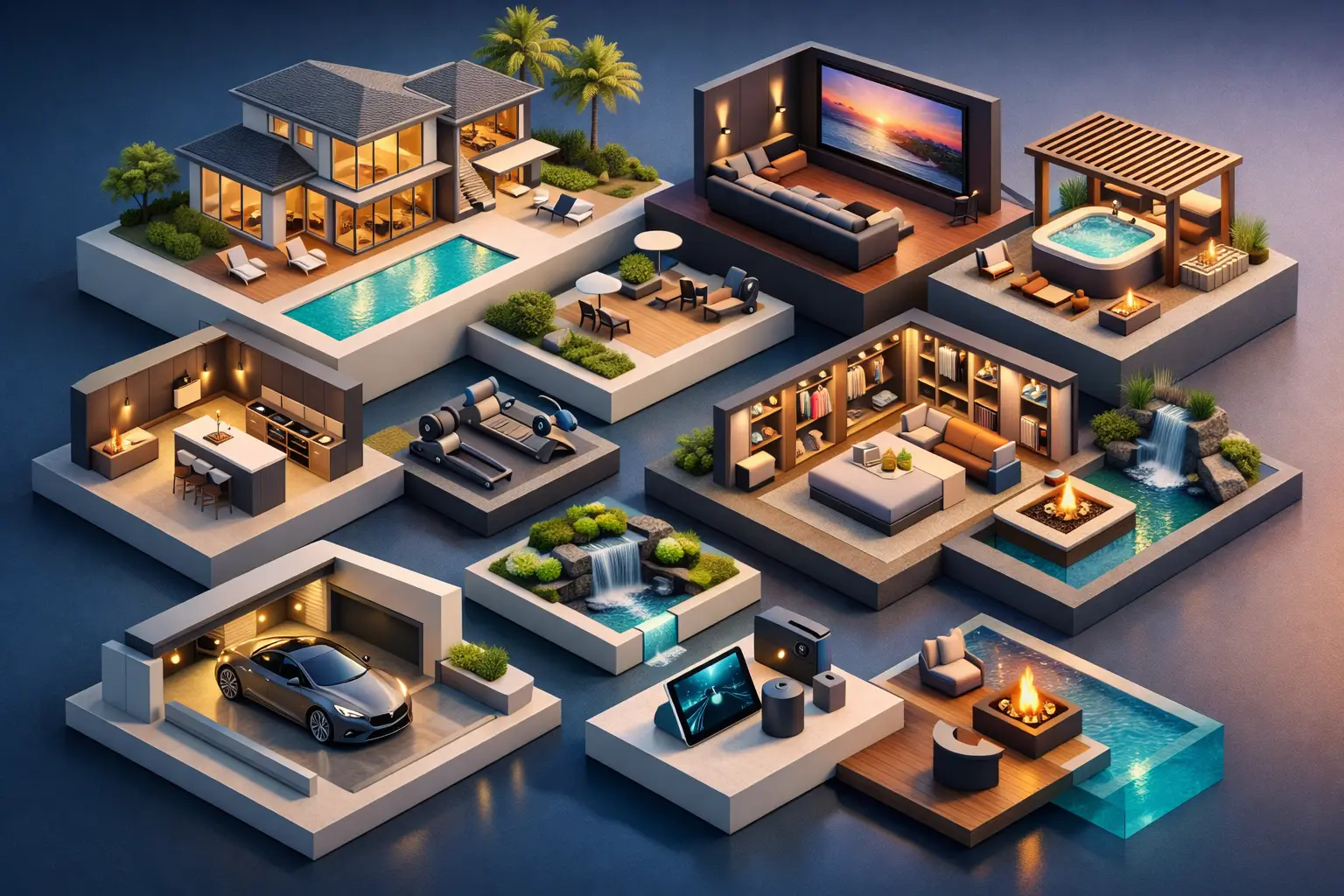
10 Best Luxury Home Upgrades That Add Value
A luxury renovation should improve more than the way a home photographs. It should make daily routines easier, strengthen long-term property value, and bring the quality of the construction in line with the quality of the design. The best luxury home upgrades do all three, especially in Southern California, where indoor-outdoor living, energy performance, seismic readiness, and efficient use of square footage all carry real weight.
For a substantial remodel, the most valuable decisions are usually made before demolition begins. A cohesive plan allows the architectural layout, engineering requirements, finishes, permits, and construction sequencing to support one another. That is how a home feels intentional rather than simply expensive.
How to Choose the Best Luxury Home Upgrades
The right investment depends on the property, neighborhood, and ownership plan. A homeowner preparing to stay for 15 years may prioritize a primary suite, a chef-level kitchen, and resilient building systems. An owner with a high-value property in Los Angeles or Orange County may gain more from an addition that corrects a dated floor plan or creates a true indoor-outdoor entertaining space.
Start with the elements that affect the entire house: layout, natural light, circulation, structural condition, and mechanical capacity. Premium appliances and imported stone make an immediate impression, but they cannot compensate for undersized electrical service, poor ventilation, awkward room relationships, or unfinished details. The strongest projects pair high-design finishes with professional-grade equipment and disciplined construction.
1. Rebuild the Kitchen Around How You Live
The kitchen remains one of the most influential upgrades in a luxury home, but the standard has moved well beyond new cabinetry and countertops. A successful high-end kitchen is organized around workflow, storage, entertaining, and sightlines to adjacent living spaces.
Consider a larger island with functional seating, concealed appliance garages, full-height pantry storage, integrated refrigeration, and a dedicated beverage or prep area. For homes that host often, a secondary back kitchen can keep service work out of view while maintaining a polished main space. Material selection matters, but so do appliance clearances, ventilation design, task lighting, and durable cabinet construction.
A kitchen expansion can be a smart value driver when it improves connection to a family room, dining area, or backyard. It is less effective when it consumes too much living space or creates a layout that does not fit the home’s architectural character. The goal is a kitchen that works at full capacity without looking overbuilt.
2. Create a Primary Suite With Hotel-Level Function
A primary suite should feel private, composed, and highly functional. In many older Southern California homes, the opportunity is not simply a larger bedroom. It is a better suite plan: a well-proportioned sleeping area, a substantial walk-in closet, a dedicated dressing zone, and a bathroom designed for two people to use comfortably at the same time.
Luxury bathroom features should earn their place. A curbless shower with linear drainage, full-height stone or porcelain surfaces, custom vanities, layered lighting, heated floors, and a freestanding tub can create a refined experience. Proper waterproofing, ventilation, plumbing layout, and slope are just as critical as the visible finishes.
Wellness additions are increasingly desirable when they suit the owner’s lifestyle. A steam shower, sauna, cold-plunge area, or fitness room can differentiate a home, but each requires careful planning for moisture management, electrical loads, drainage, and maintenance access.
3. Make Indoor-Outdoor Living a Permanent Part of the Plan
In this market, indoor-outdoor living is not an accessory. It is often one of the highest-impact ways to change how a home performs. Large multi-panel doors, expanded patios, covered outdoor rooms, built-in grilling areas, and integrated landscape lighting can extend usable living space without adding conventional interior square footage.
The best results come from treating the exterior as an extension of the architecture. Floor elevations, drainage, door thresholds, shade, privacy, and material transitions all need to be resolved early. An outdoor kitchen that looks impressive but lacks storage, utility connections, weather protection, or adequate circulation will not serve the way a luxury space should.
For hillside, coastal, or heat-exposed properties, durable materials and site-specific detailing are essential. Shade structures, high-performance glazing, proper waterproofing, and drainage planning protect the investment while improving comfort.
Best Luxury Home Upgrades for Space and Flexibility
4. Add a Room That Solves a Real Layout Problem
A room addition can be one of the most consequential upgrades available because it changes a home’s utility and market position. The most strategic additions address a clear deficiency: a missing primary suite, limited family space, no dedicated office, insufficient bedrooms, or a disconnected kitchen and living area.
Rather than adding square footage in isolation, assess the whole plan. A well-designed addition should improve circulation, access to light, outdoor connection, and privacy. It should also respect setback requirements, zoning, utility capacity, structural ties, and the existing home’s rooflines and massing.
An attached ADU or separate guest suite may offer another path to flexibility. Depending on the site and local regulations, it can support multigenerational living, long-term guests, a home office, or rental income. The best use case depends on the property owner’s goals and the jurisdiction’s requirements, so early feasibility and entitlement review are worth the effort.
5. Upgrade Lighting, Power, and Smart Control Together
Lighting is one of the clearest indicators of a professionally planned luxury home. It should be layered, not uniform. Ambient lighting establishes the overall mood, task lighting supports daily activity, and accent lighting gives depth to architecture, art, millwork, and landscape elements.
Recessed fixtures alone rarely create a premium result. Combine decorative fixtures with under-cabinet lighting, wall washes, toe-kick illumination, dimming zones, and carefully placed exterior lighting. Color temperature and fixture quality matter. Inconsistent lighting can make even exceptional finishes look flat.
Smart-home controls are most effective when they reduce friction rather than add complexity. Centralized control for lighting, climate, shades, security, cameras, gates, audio, and irrigation can improve convenience and property oversight. Plan the wiring infrastructure during construction, when walls are open, and confirm that the system can be serviced and expanded over time.
6. Improve the Building Envelope and Mechanical Systems
Luxury is comfort that remains consistent through the seasons. High-performance windows, insulation upgrades, air sealing, efficient HVAC equipment, zoning, and balanced ventilation may not be the most visible improvements, yet they are often among the most valuable.
A full-home renovation is the right time to evaluate electrical panel capacity, plumbing condition, ductwork, water heating, and the home’s thermal envelope. These systems must support the demands of larger kitchens, spa bathrooms, EV charging, home offices, and advanced controls. Addressing them early avoids costly compromises later.
The trade-off is budget allocation. Invisible work can feel less exciting than a new stone slab or custom wine display, but it protects the experience of every finished room. It also provides a stronger foundation for premium materials and equipment.
7. Invest in Resilience Before It Becomes Urgent
For many Southern California properties, earthquake retrofitting, fire-conscious construction, drainage improvements, and smoke-damage remediation are practical luxury investments. They protect the home, improve insurability considerations, and preserve value in a market where buyers increasingly scrutinize condition and risk.
A seismic retrofit may involve foundation bolting, cripple-wall bracing, structural connections, or broader engineering upgrades depending on the building type and age. Fire-resilient choices can include noncombustible exterior materials, upgraded roofing assemblies, ember-resistant vents, defensible site planning, and appropriate glazing. These are not cosmetic upgrades, but they reflect a higher standard of ownership and construction planning.
8. Use Custom Millwork and Materials With Discipline
Custom millwork gives a home its tailored identity. Built-in media walls, library shelving, mudroom storage, paneled entries, statement fireplaces, and integrated closets can add function while making rooms feel complete. The difference is in the detailing: reveals, proportions, hardware, finish consistency, and the way the millwork meets adjacent surfaces.
Premium materials should be selected for performance as well as appearance. Natural stone may require more maintenance than porcelain. Wide-plank wood flooring can be beautiful but may react to changes in humidity. Handmade tile introduces variation that should be understood before installation. A curated showroom process helps homeowners compare these choices under real lighting and make decisions that fit both the design and the maintenance expectations.
9. Treat Project Management as Part of the Upgrade
The most expensive mistake in a luxury remodel is often fragmented coordination. When the architect, designer, engineer, material suppliers, and contractor operate separately, decisions can be delayed, scope gaps can appear, and responsibility becomes difficult to track.
An integrated design-build process creates accountability from preconstruction through final installation. It allows the team to verify existing conditions, coordinate permits and engineering, develop realistic budgets, select materials early, and sequence construction around long-lead items. MDM General Contractor approaches substantial residential projects through this end-to-end management model because premium results depend on control as much as creativity.
Before committing to any upgrade, ask what it requires behind the walls, how it affects permitting, and who is responsible for coordinating every trade. The most rewarding luxury home is not defined by one dramatic feature. It is the home where every detail, visible and invisible, has been planned to perform for the people who live there.